The 2024 Civic Sedan procedure calls for a new drain-bolt washer and specifies 40 N·m for the drain bolt. It requires removing any retained old filter gasket, lubricating the new gasket and following the supplied filter instructions.
Honda Civic
US 2024 Civic Sedan owner-manual procedure; not Type R or an unverified body/market.
| Item | Value | Application / source |
|---|---|---|
| Drain-bolt torque | 40 N·m / 30 lbf·ft | 2024 Civic Sedan cited factory procedure and matching original hardwareFactory source ↗ |
| Specified drain seal | New washer | 2024 Civic Sedan cited factory procedureFactory source ↗ |

Prepare for the under-cover fasteners
Honda's cited 2024 sedan procedure describes Phillips-head screws and slotted fasteners that turn ninety degrees counterclockwise for under-cover removal. Inspect the actual panel and gather tools that fit those fasteners before beginning. A previous repair may have substituted hardware, so an unexpected attachment needs identification rather than forcing.
Keep the removed fasteners organized by position. Preparing a way to reinstall the cover securely is part of the service, not an optional cosmetic step. This guide does not claim a universal socket diameter for a drain plug or oil-filter wrench where the cited manual does not provide one.
Treat each sealing surface as its own task
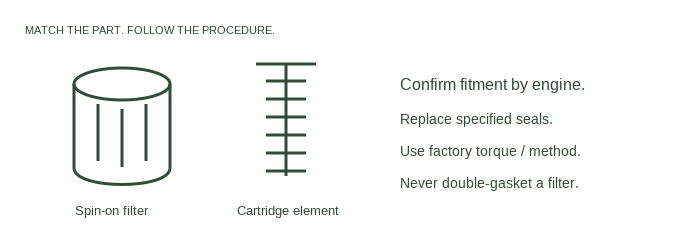
The procedure calls for checking that the old oil-filter gasket has not remained on the engine and applying clean oil to the new filter gasket. It then directs the filter installation to follow the filter's supplied instructions. That distinction matters when the replacement product describes its own tightening method.
For the drain bolt, Honda specifies a new washer and 40 N·m. The bolt setting is not a filter-tightening setting. Verify that the plug, threads and sealing arrangement match the factory application before applying it; a repair plug or altered pan can require different information.
Finish the physical work before resetting
The service sequence reinstalls the cap, performs a first-start leak inspection, shuts down and waits three minutes before the dipstick check. If the low-pressure warning appears at first start, switch off and inspect the work. Do not treat the warning as a maintenance reminder that can simply be reset.
Record which engine was serviced because the 1.5- and 2.0-liter refill references differ. The filter and washer checks belong beside that record. If a catalog number is needed, use a VIN-selected Honda parts result; this owner-manual procedure does not establish an unverified universal filter part number.
Keep the parts record useful
Save the exact catalog application, supplied part number and installation information with the service record. A superseded number, replaced housing or uncertain engine application deserves a fresh VIN-based check before the next order.
- Confirm the engine, model year and stated trim scope before ordering.
- Match the physical replacement and sealing arrangement before discarding the old part.
- Follow the applicable installation method; do not reuse a removal-force estimate as a tightening setting.
- Record the actual parts supplied and verify the final level and sealing points.
Verified parts and procedure reference
| Item | Factory reference | Application / limit |
|---|---|---|
| Drain-bolt washer | Replace with a new washer | Cited 2024 Civic Sedan procedure |
| Drain-bolt torque | 40 N·m / 30 lbf·ft | Matching original drain hardware |
| Under-cover fasteners | Phillips-head and quarter-turn slotted fasteners | Inspect actual panel before preparing tools |
| Oil filter | Follow supplied filter installation instructions | Remove retained old gasket first |
Common questions
Does a similar-looking filter prove that it fits?
No. A physical resemblance is not proof of the correct application or sealing arrangement. Use the selected factory catalog or filter manufacturer’s application listing and resolve any VIN, engine or production-date qualification before installation.
Can I apply this information to another model year?
Only the listed year and application were checked here. A shared model name or part pictured on a broad catalog page does not verify other years. Keep unverified applications separate until their own documentation has been checked.

