Identify the battery and vehicle’s isolation procedure before terminal work. Stop for a swollen, cracked or leaking case, and keep tools, sparks and cleaning residue away from vulnerable components.

Inspect before choosing a cleaning task
With the vehicle safely shut down, look for a damaged case, loose or damaged cables and substantial deposits around the terminals. A swollen, cracked, leaking or unusually hot battery needs assessment rather than a cosmetic cleanup. Do not touch deposits with bare hands or lean over a suspect battery.
Wear suitable eye and hand protection, remove metal jewelry and keep sparks and flames away. Identify whether the accessible battery is the serviceable low-voltage battery and whether the vehicle requires a particular shutdown, access or reset process. Hybrid and EV high-voltage systems are separate work; do not open their covers or touch orange cables.
Follow the supported terminal procedure
If terminal cleaning is supported for the identified battery, use the correct isolation sequence and keep a tool from bridging a terminal to other metal. Interstate’s conventional battery guidance describes negative-cable removal before positive and the reverse order for reconnection. The vehicle’s battery-management and access requirements still need to be included.
Use a suitable corrosion-cleaning process without letting the cleaning solution enter battery cells or nearby electrical components. Collect residue, keep it away from eyes and skin, and dry the cleaned areas as required. Do not use excessive force on a terminal post or tighten a connection to a guessed torque.
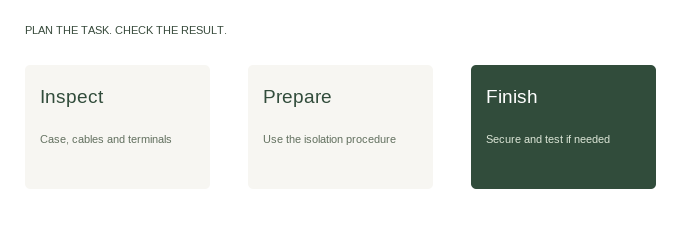
Check the connection and the original symptom
Reassemble using the specified connection method and make sure any covers and hold-downs are secure. Confirm the required vehicle settings or battery-management steps after reconnecting. A clean terminal should not be left loose or unsupported.
Corrosion alone does not establish battery capacity or charging-system health. If the vehicle was slow to start, repeatedly needed a jump or develops deposits again, obtain a battery and charging-system assessment. Keep the findings and any replacement details with your maintenance record so a recurring starting problem is investigated rather than repeatedly brushed away.
Inspect before terminal work
| Observation | Next action |
|---|---|
| Cracked, swollen or leaking case | Stop and arrange assessment |
| Loose or damaged cable | Repair the connection problem |
| Accessible routine deposits | Use the supported isolation and cleaning process |
| Repeated starting concern | Test battery and charging system |
Common questions
Does corrosion prove the battery is dead?
No. It identifies a connection or contamination concern. Battery condition and charging-system performance require their own assessment.
Can I clean a swollen or leaking battery first?
Stop and arrange assessment. A damaged case is not a routine terminal-cleaning task.
