Use the drain-plug seal or replacement plug specified for the engine. A crush washer, bonded seal and O-ring are different designs. Do not stack washers, choose by appearance alone or compensate for a damaged seal with extra tightening force.

Identify the sealing arrangement
Read the service information and inspect the actual plug. Some designs use a separate washer; others use a bonded seal or another specified arrangement. A missing old washer may still be stuck to the sump face. Confirm the correct replacement part and whether the plug itself must be renewed.
Inspect without damaging the sump
Clean the sealing surface carefully and keep debris out of the opening. Look for damaged threads, a distorted contact surface or a washer left behind. A new seal cannot repair a cracked sump or stripped thread. Stop and arrange the appropriate repair rather than tightening until the leak seems to stop.
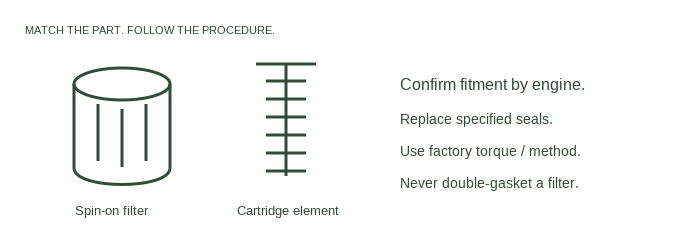
Install the correct number of seals
Use the specified single arrangement and orientation. Do not stack an old washer with a new one or add sealant unless the service procedure requires it. Start the plug carefully by hand so cross-threading is noticed before torque is applied. Use the vehicle’s tightening specification.
- Confirm engine-specific seal identification.
- Remove any old seal stuck to the surface.
- Start clean threads by hand.
- Check for leakage after correct refill and operation.
Keep spares and records sensibly
Buy the correct seal before opening the drain, especially when local parts access is limited. Keep a labeled spare for the next service if useful. Record replacement alongside the oil and filter. If seepage appears later, reassess the actual source; assuming the washer is always responsible can lead to repeated unnecessary tightening.
Common questions
Can I reuse every drain washer?
Follow the specified replacement requirement; different seal designs behave differently.
Can I use thread tape?
Do not add improvised sealing material unless the manufacturer’s procedure explicitly requires an appropriate product.
Should I keep a spare washer in the garage?
A clearly labeled correct spare can prevent an interrupted service. Keep it with the part information so it is not confused with a similar-looking seal intended for another drain plug or engine.
