Read the continuous wet boundary on a wiped, fully reinserted dipstick. The safe area is defined by its marks, not by the amount of oil coating the stick after the first pull. Repeat the check when the reading is smeared.

Identify the markings first
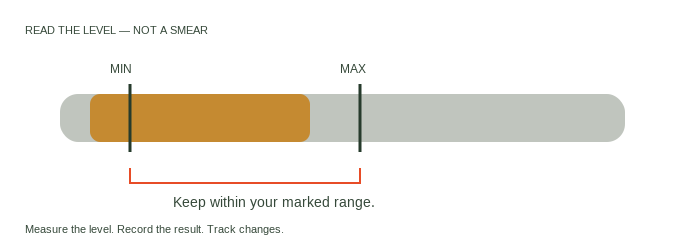
Dipsticks may use holes, lines, a crosshatched zone or MIN/MAX wording. Locate the measuring area before judging the oil film. The distance between marks is not a universal quantity. If the dipstick is a replacement, confirm it is correct for the engine; an incorrectly sized stick can mislead even when the checking technique is good.
Separate the oil level from smears
Wipe the measuring end, insert the stick fully, withdraw it smoothly and examine both faces in good light. A narrow streak extending up one side often comes from the tube. The useful reading is the consistent wet edge across the measuring area. Follow any manufacturer instruction about which side to use.
Make pale oil visible without contamination
Hold the stick at an angle to light so the reflective wet film stands out. A clean background can make the edge easier to see, and a close photograph can help compare repeated checks. Do not dip paper, chalk or another improvised marking material into the engine. Keep the cloth lint-free and the dipstick clean.
- Repeat a doubtful reading before topping up.
- Check on level ground using the specified settling time.
- Fully seat the stick each time.
- Inspect a bent or damaged replacement before relying on it.
Interpret the range
A reading inside the specified range normally means no top-up is needed. Oil above the measuring range, a level that moves unexpectedly or contamination needs a separate assessment. First confirm that your method is correct and that the car is level. Avoid turning an uncertain reading into a certain overfill by pouring in a whole bottle.
Common questions
Which side of the dipstick is correct?
Follow the engine’s instructions. If the sides disagree badly, wipe and repeat rather than averaging an obvious smear.
Does the low mark mean the engine is empty?
No. It marks the lower permitted measuring limit, not an empty sump.