Check the exact product name, viscosity, performance category and required approvals. Read the back label and current data sheet as well as the front. Buy through a traceable seller and question damaged seals, unclear identity or claims that cannot be verified.

Build the label-reading order
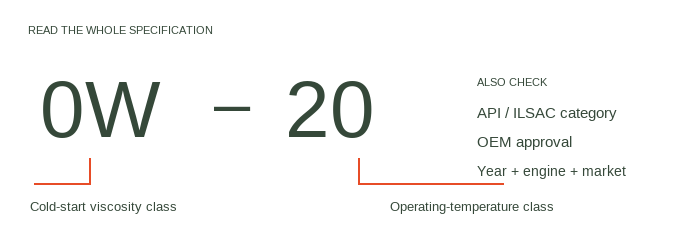
Start with the engine’s written requirement, then match viscosity and performance or approval codes. Treat synthetic, high mileage and extended performance as additional descriptions rather than substitutes for those requirements. Check the exact viscosity variant, because nearby bottles in the same family can have different approvals.
Distinguish claims from certification
Read headings such as approvals, meets requirements and recommended for carefully. API provides licensing information and directories that can help verify relevant claims. An attractive mark or a familiar-looking bottle alone is not proof that the exact product is licensed or appropriate for your engine.
Check purchase traceability
Keep the receipt and seller details. Inspect the cap, seal, batch code and label for obvious damage or inconsistencies, but do not pretend visual checks can authenticate every bottle. If something is suspicious, contact the brand through its official support with photos and batch information before using the contents.
- Match the complete engine requirement.
- Read current exact-product data.
- Retain seller and batch information.
- Resolve suspicious packaging before pouring.
Handle ambiguous online listings
A retailer may use an old image or a generic product description. Ask for the current specifications of the supplied item rather than assuming the photograph controls. Do not buy on approval keywords alone if the exact product identity is missing. A slightly cheaper unknown product can make the entire service record uncertain.
Photograph the exact bottle, then verify the claim
A label-reading record should show the full product line, viscosity, performance wording, OEM approval or license, and container identification. Photograph the actual bottle you intend to use rather than saving a seller’s generic product image. Product families and neighboring grades can have different documented claims, even when their front labels look similar.
Trace each important claim to an appropriate source. An API certification mark, an OEM license and a supplier’s recommendation are different kinds of information. For GM dexos, compare the exact product and grade with the official license entry. If the bottle and a current data sheet disagree, retain both and ask the supplier for clarification before pouring. A readable product identity also makes later top-ups and service-history checks more reliable.
Photograph the exact bottle, then verify the claim
Exact bottle and required claims are readable
Verify the relevant certification or approval and retain the identity.
Only a brand-level photograph or vague seller claim is available
Obtain the actual grade-specific label or data sheet.
A required approval or license cannot be matched
Resolve the discrepancy or choose a clearly documented alternative.
Common questions
Can I identify counterfeit oil by color?
No. Appearance alone cannot authenticate oil. Use traceable purchasing and manufacturer verification when concerned.
Is the front label enough?
It often omits important approvals, limitations and exact application details.
What photos are useful for a product question?
Capture the front, back, cap or seal and batch code clearly. Include the seller and receipt details when contacting the manufacturer, while keeping unrelated personal information out of public posts.