Low-SAPS describes limits on sulfated ash, phosphorus and sulfur in an oil formulation. It is relevant to certain engine and exhaust-treatment applications, but it is not a universal upgrade. Match the exact ACEA category, viscosity and manufacturer approval required.

Treat the phrase as a clue, not the specification
A bottle’s low-ash or emissions-system wording may help explain its intended application. It does not replace the full category or approval. Several products can use similar descriptive language while meeting different engine requirements. Copy the precise vehicle requirement instead of shopping only by that phrase.
Check aftertreatment compatibility
Some engines require oil selected for compatibility with their exhaust-treatment equipment. The correct product balances those requirements with engine lubrication needs. Do not assume any oil described as low-SAPS is suitable for every diesel or gasoline particulate-filter application. The manufacturer’s approval remains the practical decision point.
Avoid changing categories by guesswork
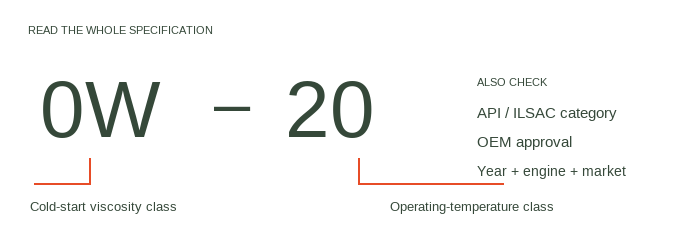
ACEA categories are not a universal ranking. A higher-looking number, lower ash claim or matching viscosity does not establish substitution permission. Check the exact category and any additional approval on the current product data sheet. Ask the manufacturer when two apparently similar codes conflict.
- Write down the full category.
- Match viscosity and OEM approval.
- Check the exact grade’s data sheet.
- Do not use low-SAPS wording as a universal substitute.
Keep service timing separate
A low-SAPS label does not automatically authorize a longer oil-change interval. Use the vehicle’s schedule and operating-condition rules. If the engine consumes oil or has an emissions-system warning, investigate the actual cause. Changing oil category without evidence can add uncertainty rather than resolve the problem.
Common questions
Is low-SAPS always better for an older car?
No. Use it only when its full specification suits the engine.
Does low-SAPS mean all ACEA C oils are interchangeable?
No. The exact category and manufacturer requirement matter.
Should I choose only by a particulate-filter label?
Treat it as descriptive context. The engine can require a particular category and manufacturer approval, so verify the complete product data rather than assuming one emissions-related phrase covers every application.