Use the Mazda3 manual for the exact engine, year and market. Turbocharged and non-turbo applications should be checked individually, and the oil's performance requirement matters alongside its viscosity.
Mazda Mazda3
Model-family oil and maintenance guidance.

Mazda3 oil selection — what to confirm
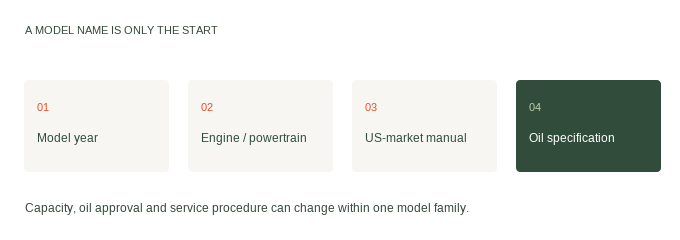
Mazda3 recommendations found online can refer to different generations or countries. Identify the actual US engine before selecting a manual. Read the recommended-oil section and any alternative-grade note completely. A product described as suitable for Japanese cars is not enough; compare the bottle label and exact formulation with the engine's published requirement.
A practical way to handle it
Confirm the filter application and oil-and-filter service-fill reference if doing a full change. For a top-up, obtain a reliable level reading first and add only the measured shortfall. Keep the product and specification on the invoice or in your DIY log. This makes the next purchase easier and gives a shop a clear history if a concern develops.
Mistakes to avoid
Do not automatically copy turbo-engine advice to a non-turbo Mazda3 or assume a recommendation from another country applies. Do not switch to a heavier oil simply because the car has high mileage. If oil use changes, measure the pattern, check for leaks and seek diagnosis rather than trying unsupported substitutions or additives.
Your working checklist
- Confirm US model year and exact engine.
- Read grade and performance requirements.
- Verify filter and service-fill reference.
- Record the exact oil installed.
Common questions
Is Mazda3 oil selected only by model year?
No. Engine configuration and sales market can matter too. Use the manual matching the actual vehicle and verify all stated lubricant requirements rather than relying on a model-year headline.
Can Mazda3 oil be selected from an overseas recommendation?
Confirm the US engine's manual before adopting it. A shared model name can have different engines or published guidance in another market. Preserve the actual requirement rather than combining recommendations.