A pale creamy deposit beneath the oil cap can occur with moisture, particularly during repeated short trips, but it is not a diagnosis by itself. Compare the cap with the dipstick, coolant trend, and engine behavior. Widespread milky oil, overheating, or a rising level needs prompt investigation.

Observe before cleaning the evidence
With the engine off and cool, photograph the underside of the filler cap and the visible filler opening. Note whether the residue is a small localized film or extensive material. Check the dipstick using the prescribed method and inspect the cold coolant reservoir level without opening a hot cap. Write down the recent journey pattern. Cap residue and milky sump oil are different observations; a workshop will want to know which you actually saw.
Use other symptoms to set priority
Ordinary condensation can be relevant when the engine rarely reaches its normal operating conditions. Coolant contamination is a more serious possibility when the reservoir falls, the sump level rises, or overheating and rough running accompany the deposit. A recent head or cooler repair also changes the investigation. Avoid concluding that a head gasket is good or bad from the cap alone, and avoid using a long drive as an experiment when other warnings are present.
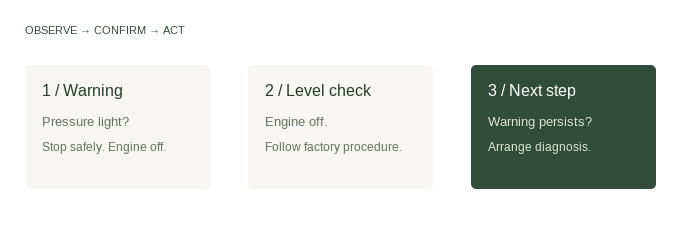
Choose a measured next step
If the vehicle otherwise behaves normally, follow its maintenance guidance and monitor the pattern under consistent conditions. Persistent or increasing residue deserves a workshop discussion. If the oil itself looks contaminated or the engine overheats, stop normal use and seek advice on recovery. Ask what tests will distinguish condensation from a cooling-system path, and keep before-and-after photographs rather than repeatedly cleaning away the only evidence.
- Record cap residue separately from dipstick appearance.
- Check coolant only when safely cold.
- Note short-trip and cold-weather use.
- Do not pour cleaner into the engine to remove the symptom.
Use the pattern of contamination, not one cap photograph
Look at where the pale deposit appears and what else has changed. A localized cap deposit after short trips, visibly cloudy oil on a valid dipstick reading, a rising level and unexplained coolant loss are different observations. Record them separately. A cap photo alone cannot confirm a failed head gasket, and a clean cap cannot rule out contamination elsewhere.
Do not deliberately take a long, hard drive merely to make a suspicious deposit disappear. First check for warning messages, overheating or changes in the fluid levels using their correct checking conditions. Persistent contamination signs deserve diagnosis. If oil analysis is appropriate, tell the laboratory the actual question and the oil’s service history; appearance does not provide a chemical concentration or a safe operating threshold.
Use the pattern of contamination, not one cap photograph
Deposit appears only under the cap
Document trip pattern and fluid-level history; this observation alone does not establish the cause.
Cloudy oil, rising level or coolant loss is also present
Arrange diagnosis before normal use rather than clearing the symptom by driving.
Overheating or pressure warning appears
Stop safely, switch off and obtain assistance.
Common questions
Should I scrape the deposit into the engine?
No. Keep debris out of the filler opening and clean the removed cap appropriately if required.
Is a clean dipstick a guarantee?
No. It is one observation; coolant trends, overheating, and persistent changes still matter.
