An oily film in a coolant reservoir needs investigation, but residue or discoloration alone does not identify a failed head gasket. Check only when the system is safely cold, photograph the condition, and arrange assessment of possible internal and service-related contamination routes.

Observe without opening a hot system
Look through the reservoir when possible and follow the manual before removing any cap. A pressurized hot system can cause serious injury. Record the appearance, cold level, and whether the engine has overheated. Keep oil or additives out of the cooling system and do not skim the surface with tools that introduce dirt. The exact fluid design and previous coolant products matter when interpreting unusual deposits.
Provide the service history
Tell the workshop about recent oil, cooling, transmission, or engine work and whether the vehicle has an oil-to-coolant heat exchanger. Several possible paths can produce cross-contamination depending on the design. A pressure test, cooler inspection, or other engine-specific investigation may be appropriate. The reservoir photograph is evidence of appearance, not a complete explanation of which component allowed fluid to move between systems.
Ask how the repair will be verified
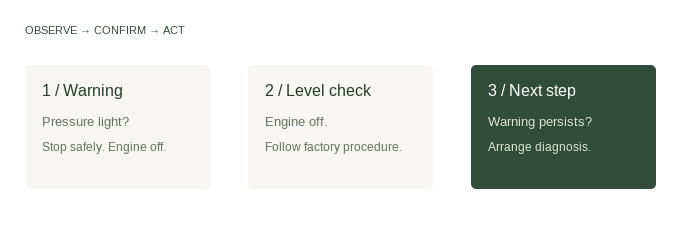
The source must be repaired before cleaning and refilling procedures can have a lasting result. Ask which circuits are affected, which fluids and components need attention, and how residual contamination will be distinguished from a continuing leak. Do not use household detergent or a universal flush recipe. If overheating, serious running problems, an oil-pressure warning, or major fluid loss occurs, stop safely and arrange assistance. Record whether residue returns after the specified repair and cleanup; that distinction helps the workshop plan any follow-up.
- Photograph the cold reservoir condition.
- Record all recent fluid and engine work.
- Ask which contamination route was confirmed.
- Use the specified cleaning and refill procedure.
Common questions
Is the head gasket always the cause?
No. The exact engine and any heat-exchanger arrangement influence the possibilities.
Can I clean the tank and keep driving?
Cleaning appearance does not repair the source. Establish the cause and safe operating decision first.