Fresh oil after a service may be spilled fill oil or an active leak. Check the level, note the leak rate, and inspect the accessible filler and filter areas with the engine off. A rapid leak or pressure warning needs shutdown and assistance before more engine operation.

Gather the before-and-after details
Write down when the service was completed and when the first stain appeared. Keep the invoice, product labels, mileage, and any photographs taken before the work. A new stain immediately after service makes recently disturbed components relevant, but it does not prove a particular person or part is at fault. An undertray may slowly release oil spilled during the job. The distinction matters because cleanup and a sealing repair are different actions.
Inspect the parts that were disturbed
From a safe position above the cooled engine, look for a loose or missing filler cap, an unseated dipstick, wet cartridge-housing edges, or oil around an accessible spin-on filter. Drain-plug and lower filter checks require suitable access and support. Do not blindly tighten a plug or filter harder; damaged threads, a misplaced seal, or a doubled gasket can become worse. Do not reach into a running engine bay to hunt for a spray.
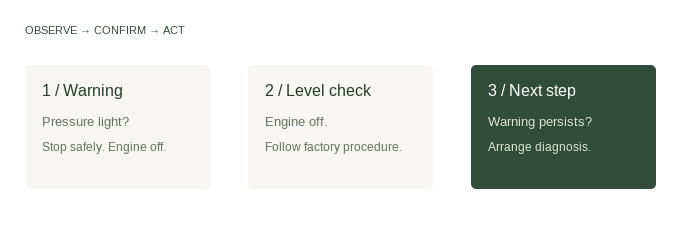
Ask for a controlled reinspection
Check the current level using the manual and report whether it is stable. If the leak is substantial, agree on recovery instead of driving back merely because the shop is nearby. Ask the provider to document the leak source, restore the correct level, clean retained oil, and recheck for leakage. A completed repair should address the cause and confirm the result, not just wipe the driveway stain away.
- Save the service invoice and oil/filter part numbers.
- Record the size and timing of fresh drips.
- Do not run a low engine to locate the leak.
- Have contaminated undertrays cleaned appropriately.
Build a post-service leak record without losing the evidence
Record the service date, odometer reading, invoice details and when the first fresh drip appeared. Photograph the area from a safe position with the engine off. Oil can travel along an undertray or engine surface, so the lowest wet point does not prove which seal is leaking. Keep the original receipt and the identity of the installed filter available for the shop.
A small amount of residual spilled oil and an active service leak require different responses. After an accessible area is cleaned appropriately, fresh oil appearing again is useful evidence of continued leakage. Do not reach near a running belt or hot exhaust to trace it, and do not crawl beneath an unsupported vehicle. A pressure warning, rapidly falling level or substantial fresh loss calls for the engine to remain off while help is arranged.
Build a post-service leak record without losing the evidence
Fresh oil appears again after accessible residue is cleaned
Have the serviced sealing points inspected; preserve photographs and the invoice.
Only a stain is visible and the source is uncertain
Check level correctly and document whether new oil appears; do not identify the leak by location alone.
Pressure warning or rapid loss accompanies the leak
Switch off safely and arrange assistance rather than returning by driving.
Common questions
How long should spilled oil drip?
There is no universal duration. The amount retained and shielding differ; an active leak needs inspection.
Should I add oil and keep going back to the shop?
Top-ups do not make a major leak or pressure warning safe. Arrange assistance when those conditions are present.