A cooling-system pressure cap controls pressure and can include vent and vacuum-relief functions. Its rating, seal and fit must match the cooling system.

Identify the pressure cap on your system
Some vehicles use a radiator-mounted cap, while others place the pressure cap on an expansion tank. A separate overflow container may not be the pressure-control location. Identify the actual arrangement before interpreting a loose cap, wet bottle or changing level.
Never remove a cap from a hot or pressurized cooling system. A pressure-release feature does not make hot coolant safe to handle. Wait for the safe conditions required for service, then inspect the identified cap and neck without putting your face over the opening.
Pressure control is an application requirement
Pressure changes the cooling fluid’s boiling behavior, but a higher cap rating is not a general overheating upgrade. The system’s hoses, tank, radiator and other components are designed around their intended operating conditions. Gates describes cap products with application-specific vent and vacuum-relief valves and different fit dimensions.
A cap that looks similar can still have the wrong pressure setting, depth or sealing arrangement. Check the actual replacement application instead of copying a pressure number from another car. A damaged filler neck can also prevent a correct new cap from sealing properly.
Test the concern instead of replacing at random
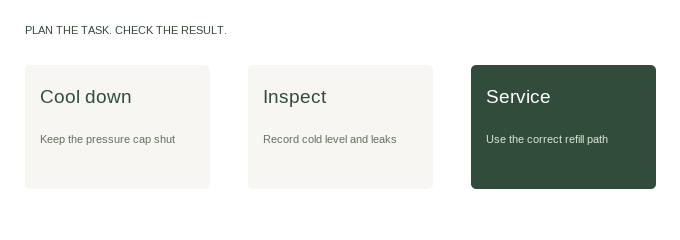
When cold, inspect visible sealing surfaces for damage or deposits and note coolant staining around the cap area. Do not conclude that every reservoir bubble is caused by the cap. Leakage, trapped air, circulation problems and other faults can produce related symptoms.
A suitable pressure and cap test can help distinguish a sealing or control problem from another cooling-system fault. Ask what test was performed and what specification was used. After a repair, recheck the cold level as directed and record any renewed loss or overheating so the result can be evaluated.
A replacement cap needs more than a visual match
| Attribute | Check |
|---|---|
| Pressure rating | Matches the specified application |
| Depth and seal | Fits the intended neck |
| Valve arrangement | Matches the system design |
| Filler neck | Undamaged and able to seal |
Common questions
Can a higher-pressure cap cure overheating?
Do not change the rating as a general fix. The cap must match the system, and the overheating cause still needs diagnosis.
Is the reservoir cap always the pressure cap?
Cooling-system layouts differ. Identify the pressure-control component for the actual system.