Keep known, suitable oil in its original labeled container, close it securely and store it according to the maker’s instructions. Protect it from water, dirt and unsuitable temperature exposure. Do not combine unidentified leftovers into a bottle you later treat as a known product.

Preserve the product identity
The label should show the exact product, viscosity and approvals. Add a note of the opening date without obscuring the batch information. A clean-looking anonymous bottle is difficult to evaluate later. If you transfer oil for a legitimate reason, use an appropriate clean container and preserve full identification, but original packaging is generally easier to manage.
Prevent contamination during use
Clean dirt from around the cap before opening and keep the cap and funnel clean. Close the bottle promptly after measuring a top-up. Do not rest the funnel in a dirty drain pan and then return it to a fresh-oil container. Keep new oil physically separate from used oil and other automotive fluids.
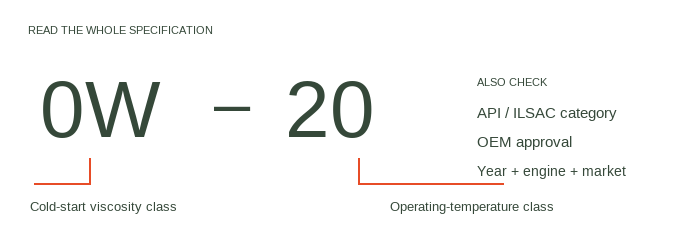
Follow storage conditions and dates
Consult the maker’s shelf-life and storage advice. A recommendation for unopened oil should not be assumed to apply unchanged to a repeatedly opened container. Avoid moisture exposure and temperature conditions outside the product guidance. Keep containers upright in a secure location away from children and animals.
- Retain the exact label and batch code.
- Note the date first opened.
- Use clean dispensing equipment.
- Inspect the seal and container before the next use.
Match the next application again
Before pouring leftover oil into a different car, recheck that vehicle’s requirement. Ownership changes and new engines can make an old top-up bottle unsuitable even when it is still within storage guidance. If the contents or history are uncertain, contact the maker or use the appropriate waste route rather than guessing.
Common questions
Can I store new oil in an old coolant bottle?
Avoid a contaminated or misleading container. Retain suitable original packaging and clear identification.
Can I mix partial bottles to save space?
That loses product-specific certainty. Store known products separately and use only compatible oil.
