No driveway puddle does not rule out oil loss. Oil may collect on covers, escape only under driving conditions, or enter the combustion process. Start with a consistent measurement and top-up record, then use physical evidence to separate an external leak from internal consumption.

Confirm that the level is actually falling
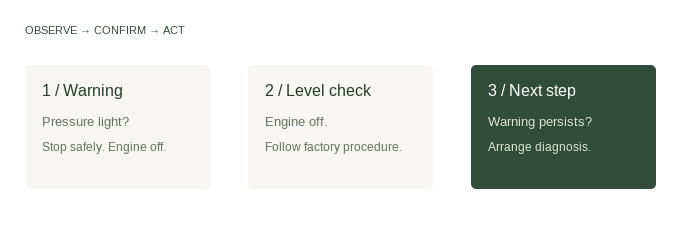
Uneven parking, different waiting times, and a partly inserted dipstick can create an apparent drop. Establish a baseline within the permitted range using the manual's procedure. Record mileage and measured additions. A vague statement that the engine uses a bottle occasionally is difficult to interpret because bottle sizes and travel distances differ. Do not extend the oil-change schedule simply because you keep adding fresh oil.
Investigate consumption with a plan
If no external leak is found, record any smoke, rough running, fault codes, or unusual oil in intake plumbing for professional assessment. The ventilation system, turbocharger where fitted, and internal engine condition can be relevant. Ask for the exact manufacturer consumption-test method before an expensive repair. A sudden rate increase, pressure warning, heavy smoke, or an empty reading means the issue has moved beyond routine monitoring.
- Use the same checking conditions every time.
- Log both distance and actual top-up quantity.
- Tell the workshop whether an undertray is fitted.
- Keep service records and exact oil specifications.
Common questions
Does no smoke mean it is not burning oil?
No. Visible exhaust is not a reliable measure of all oil entering combustion.
Can I change to thicker oil to diagnose it?
Changing products can disturb your baseline. Use the approved specification and diagnose the source of the loss.