A useful consumption test records a verified starting level, measured oil additions, distance, and consistent checking conditions. Manufacturer or warranty tests may require a specific workshop-controlled procedure. Agree on that process before changing oil grade, adding treatments, or collecting a long informal log.

Establish the baseline
Confirm the exact engine and approved oil specification, and make sure obvious external leaks have been considered. Use the manufacturer's level-check procedure, not a fixed waiting time borrowed from another vehicle. Record date, odometer, oil product, and baseline level. If a dealer is managing a formal test, ask who seals or measures the system and whether you should contact it before adding oil. Never let a test override the minimum safe level.
Make additions measurable
Use a marked container or a clearly documented quantity from a known bottle size. Record each addition immediately together with the odometer and level reading. Note towing, prolonged idling, very short trips, and unusual loads because operating conditions can matter. Use one measurement method throughout. A log with several reliable readings is more helpful than a single dramatic photograph of an apparently dry dipstick taken on a slope.
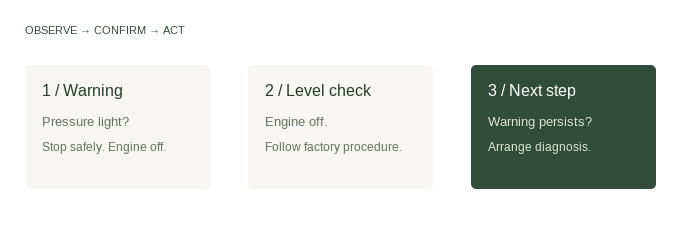
Review the result against the right criteria
Ask which engine-specific limit and test conditions apply, and request the measured findings in writing. Do not compare the result with an internet rule that claims every engine should consume the same amount. The next diagnostic step should follow evidence: leak inspection, ventilation-system assessment, or internal tests as warranted. A sudden increase, pressure warning, overheating, or heavy smoke warrants earlier attention instead of waiting for the planned endpoint.
- Log date, distance, level, and measured oil added.
- Keep the same specification during the test.
- Follow the provider's formal test instructions.
- Retain receipts and written results.
Design a log that another person can reproduce
Use the same valid oil-level procedure at the beginning and end of an observation period. Record the odometer, dates, exact top-up product and measured additions. Keep photographs of the dipstick or electronic reading with the measuring conditions. A starting overfill or an unrecorded addition can make a calculated consumption rate misleading.
Separate external leakage observations from the amount required to restore the measured starting level. Tell the workshop about repairs or driving-pattern changes during the period. Hyundai’s published oil-consumption bulletin illustrates a manufacturer-defined inspection process, but its criteria are not a universal allowance for other engines or a promise of warranty coverage. If a dealer is running a formal test, agree on its instructions and recordkeeping before adding oil or changing service conditions.
Design a log that another person can reproduce
Starting and finishing conditions match and additions are measured
Calculate the observed rate and retain the underlying log.
Top-ups or checking conditions were not recorded
Improve the baseline rather than treating an uncertain rate as a verdict.
A warning, rapid loss or unsafe level occurs during a formal test
Prioritize safe correction and contact the person running the test.
Common questions
Can I calculate a rate from one top-up?
You need a reliable starting level, known distance, and measured addition. A repeatable series gives better context.
Should I stop checking during a dealer test?
Ask the provider how to monitor safely and when to return. Do not allow the oil to fall below the permitted range.