dexos1 Gen 3 and dexosD are separate GM oil specifications. Start with the exact vehicle and engine requirement, then verify a licensed product in the required viscosity. The same SAE grade on two bottles does not establish the same application.

Separate the application before comparing brands
GM publishes distinct licensed-product lists for dexos1 Gen 3 and dexosD. Its current dexosD notice addresses diesel engines that previously used dexos2, while its dexos1 Gen 3 notice addresses earlier dexos1 requirements. These are useful application boundaries; the word dexos alone is incomplete.
A vehicle family can contain gasoline and diesel engines in the same model year. Record the actual powertrain rather than searching only by badge. An oil listing for a gasoline pickup cannot establish the lubricant required by the diesel version.
Use the correct list and the correct row
After finding the factory requirement, open the matching GM licensing list. Compare the product name, supplier, viscosity and license number against the container. Read the entire row: a manufacturer may sell several oils with similar packaging and different approval coverage.
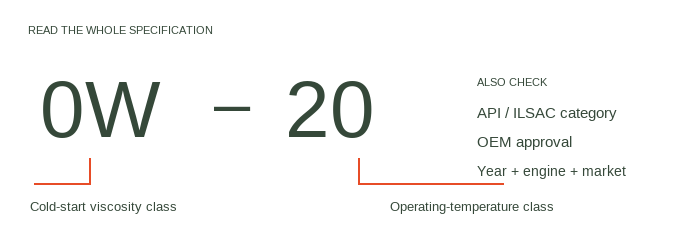
Both lists include products described as 0W-20. That shared number tells you something about viscosity classification, but it does not combine their approval systems. A store shelf tag or marketplace fitment banner is useful for finding candidates, then the exact bottle and official record settle the product match.
Keep a useful service record
Write the full specification on the work order rather than “synthetic oil.” Include the viscosity and exact product line, and retain a photo of the label or a link to its current data sheet. When comparing quotes, request the same required product standard from both providers so the final prices describe comparable work.
- Identify the engine and sales market.
- Find its complete factory oil requirement.
- Verify the matching GM license entry.
- Record the actual product and final level check.
Separate the two checks
| Check | What it answers | What it cannot establish |
|---|---|---|
| SAE viscosity | Which viscosity class is stated | The required GM approval |
| dexos specification | Which licensed performance family applies | Your engine identity or service quantity |
| Exact license row | Which product and grade are listed | Permission for every GM vehicle |
Common questions
Can dexos1 Gen 3 replace dexosD because both are 0W-20?
A matching viscosity is insufficient. Use the approval required for the engine and verify the exact product on the appropriate GM list.
Does dexosD always mean 0W-20?
No. The current GM dexosD list contains multiple viscosity grades. The required grade comes from the applicable owner documentation.
