A fuel-like odor is a reason to check the oil level trend and operating history, not a measurement of contamination. A rising level, rough running, or strong persistent odor should be assessed. Fuel dilution can change oil properties, so repeated top-ups or a different viscosity are not a diagnosis.

Collect observations safely
Check the oil with the engine off under the manual's conditions. Do not deliberately inhale vapors or handle oil with bare hands to test its smell. Record whether the odor is new, whether the level has risen, and whether the engine has had difficult starts, misfires, or frequent interrupted short journeys. Keep any diagnostic trouble codes, but avoid clearing them before the workshop has a chance to inspect the vehicle.
Understand what the observation cannot prove
Some fuel can reach the crankcase during engine operation, while excessive dilution may point to a fault or unsuitable operating pattern. A dipstick sniff cannot quantify the amount or locate the source. Oil viscosity and fuel content can be evaluated through suitable analysis, and the engine may require fuel-system or control-system checks. A generic internet threshold is not a replacement for the correct engine's specifications and test methods.
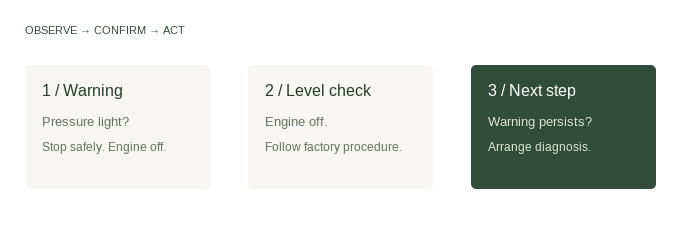
Plan a repair and oil-service decision together
Tell the technician the exact oil, change date, mileage, level history, and driving pattern. Ask whether the lubricant should be replaced and what will prevent contamination from recurring. A fresh oil change alone can temporarily hide a rising-level trend. If the engine has a pressure warning, severe rough running, leakage, or a confirmed overfull level, stop safely and seek assistance rather than trying a long drive as a cure.
- Keep the fuel and oil observations separate.
- Document a level trend before adding anything.
- Save fault-code information and service records.
- Use the approved oil after any repair.
Distinguish an odor observation from measured fuel dilution
Fuel odor is an observation, not a calibrated percentage of fuel in the oil. Record when the smell was noticed, whether the oil level has changed under repeatable measuring conditions, and whether the engine has starting or running problems. Note recent service and any oil additions so a filling error is not confused with a developing contamination issue.
A laboratory fuel-dilution test can answer a more specific question than a smell test, but its interpretation needs the engine application, oil product and service history. Use the manufacturer’s diagnostic procedure for the vehicle; an industrial analysis explanation does not establish a universal passenger-car limit. A level above maximum, warning message or abnormal running should prompt assessment before further normal driving, not repeated extraction followed by continued use.
Distinguish an odor observation from measured fuel dilution
Odor is present without a documented trend
Record the conditions and obtain application-specific advice; odor alone does not quantify dilution.
Oil level repeatedly rises under the same valid check
Arrange investigation and retain top-up and service records.
Warning or abnormal running accompanies the observation
Stop safely and obtain help before operating the engine further.
Common questions
Will a long drive always remove the fuel?
No. Do not use a long drive to treat a suspected mechanical fault or an overfull crankcase.
Can thicker oil compensate for fuel dilution?
It does not repair the contamination source and may conflict with the engine's required specification.