An unseated dipstick can allow oil escape and an unreliable reading. With the engine off and cool, verify the correct stick, seating, and visible condition. If it repeatedly comes out, oil sprays, or running changes, arrange an engine-specific assessment rather than tying it in place.

Document the event
Note whether the dipstick was recently checked or removed during service and whether it was simply left partly inserted. Photograph fresh oil before cleanup and record warning messages, smoke, and running changes. A damaged handle or seal can differ from pressure-related displacement. Do not assume one cause from the fact that the stick is raised. Keep hands clear of belts, fans, and hot components while inspecting the cooled engine.
Check the reading and hardware
Confirm that the stick is the correct application and fully seats as intended. A replacement of the wrong length can give misleading levels. Inspect accessible handles and seals without forcing or bending parts. Check the oil level using the manual's conditions once the correct hardware is established. Avoid stuffing the tube with improvised plugs or using wire to restrain the stick, because that can hide the symptom and introduce further problems.
Investigate recurrence
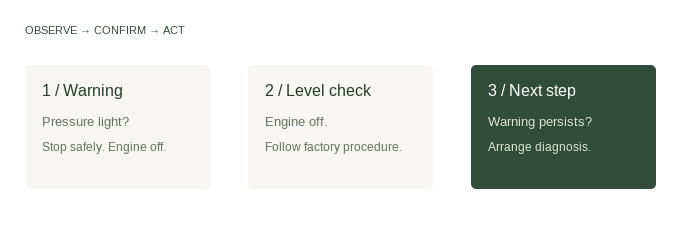
If the dipstick repeatedly lifts out, tell the workshop about oil consumption, leaks, recent ventilation work, and any rough running. It can assess the crankcase-ventilation system and other engine conditions using the appropriate procedure. A pressure warning or major oil loss remains urgent even when the tube seems to be the visible leak. After repair, verify seating, clean retained oil, and continue a consistent level log.
- Confirm recent checking or service history.
- Verify the correct dipstick part and seating.
- Do not improvise a plug or restraint.
- Ask for a diagnosis if it happens again.
Common questions
Should I force the dipstick down harder?
Use the intended fit. A damaged handle, incorrect part, or recurring displacement needs assessment.
Does it prove piston-ring failure?
No. Several causes can affect fit or crankcase conditions; the exact engine requires a proper diagnosis.