Driving risk depends on the leak rate, verified oil level, location, and warning signs. A pressure warning, rapid loss, smoke, burning smell from oil on hot parts, or fluid near brakes requires a safe stop and assessment. A small stain alone cannot establish that a journey is safe.

Start with the serious stop conditions
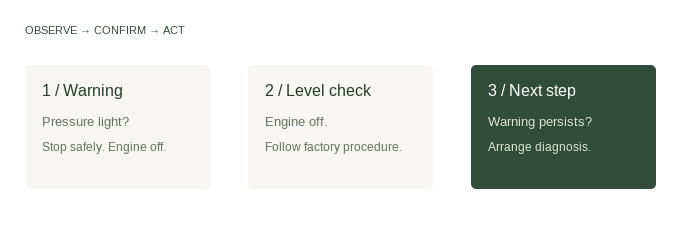
If the running engine shows an oil-pressure warning or develops knocking, pull over safely and switch it off. Do the same when oil is pouring out or smoke suggests contact with hot exhaust parts. Roadside personal safety comes first; do not crawl underneath in traffic. A normal dipstick reading does not overrule a pressure warning. When the source and rate are unknown, recovery is a more controlled way to reach a repair facility.
Check what you can establish safely
With the engine off and cool, follow the manual's level-check procedure and inspect from above for fresh oil. Note whether the leak began after service, appeared after an impact, or has been increasing. Cardboard can help document a parked leak, but a measured puddle is not a dependable prediction of how quickly oil will escape at road speed. An undertray can hide the amount leaving the engine.
Plan repair instead of a top-up routine
A minor seep with no other symptoms may be handled through a planned inspection, but it still needs a confirmed source and attention to the vehicle's instructions. Ask the workshop which observed conditions make driving inappropriate and how soon it can inspect the car. Carrying oil is useful for routine maintenance; it is not a safety system for an uncontrolled leak. Keep records of any additions until the fault is repaired.
- Pressure warning: engine off safely.
- Major active leak: arrange assistance.
- Oil near brakes or hot exhaust: urgent inspection.
- Unknown rate or falling level: do not assume a short trip is harmless.
Common questions
What if the shop is only a few minutes away?
Distance does not establish safety. A major leak or pressure failure can cause harm before you arrive.
Does oil stop-leak make driving safe?
No treatment substitutes for identifying the leak and assessing its location and rate.