A confirmed reading above the permitted maximum should be corrected before normal operation. First repeat the level check exactly as the manual specifies. The amount above the mark cannot be converted to a universal excess volume, and driving to burn it off is not a repair.

Rule out a misleading reading
Park level and use the specified engine temperature, waiting period, and dipstick or electronic measurement process. Wipe and fully reseat a dipstick; oil smeared along one edge is not the same as a clear, repeatable level boundary. Electronic systems can require particular conditions before updating. Compare the quantity added with the correct drain-and-refill capacity for the exact engine, but remember that capacity is a starting guide and the verified level is the final check.
Correct the level with controlled removal
Excess oil can be removed through an approved extraction route or by controlled draining, depending on the engine. Do not improvise suction tubing that could break inside the engine. Draining involves hot-fluid and vehicle-support risks; use a workshop if you lack the equipment or procedure. After removal, repeat the manual's check and record how much came out. Do not loosen random oil-system fittings or open a drain while under a jack-supported car.
Consider why the level became high
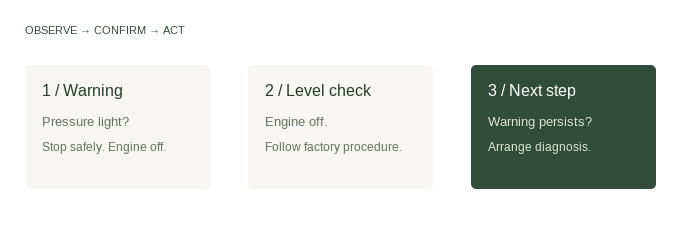
A high reading immediately after a service can be a fill error or a measurement problem. A level that rises over subsequent days can instead suggest fuel or coolant entering the oil. Those conditions need diagnosis rather than repeated extraction alone. Tell the workshop about fuel smell, coolant loss, white exhaust, changed driving patterns, or warning messages. If the engine is smoking heavily, running roughly, or showing a pressure warning, switch it off safely.
- Confirm the reading before removing oil.
- Keep the oil within the specified range.
- Document a rising level after correction.
- Use an appropriate container for removed oil.
Separate an invalid reading from a real overfill
Before removing oil, reconstruct how the reading was obtained. Note whether the vehicle was on ramps or a slope, whether the engine had just run, and whether the dipstick was wiped and fully reinserted. An angled car or a smeared first pull can produce a misleading result. Repeat the measurement under the manual’s specified conditions instead of comparing readings taken by different methods.
If the level remains above the maximum, record how much was added and the product used. A known filling mistake and a level that rises without any top-up are different problems. Correct a confirmed overfill by an appropriate service procedure before normal driving; investigate an unexplained rising level for possible contamination. Do not drive in the hope that the engine will burn off the excess, or convert a distance above the mark into quarts without application-specific calibration.
Separate an invalid reading from a real overfill
Car is angled or reading is smeared
Repeat the factory level-check method on level ground before estimating excess.
Above maximum after a repeatable valid check
Arrange controlled correction using the proper service procedure before normal use.
Level rose without recorded additions
Investigate the cause instead of treating repeated oil removal as a repair.
Common questions
Is half a quart over always safe?
There is no universal safe overfill allowance. Sump shape, engine design, and measurement conditions differ.
Can I drain a little and guess?
Remove a controlled amount, then recheck correctly. Guessing can turn an overfill into an underfill.