5W-20 and 5W-30 share a low-temperature classification but have different high-temperature viscosity grades. Choose the manufacturer’s permitted grade and approval. A higher second number is not automatically better protection or a fix for an aging engine.

Separate cold classification from hot grade
The shared 5W rating does not mean the oils are identical during every cold start. It identifies a classification with defined tests. The 20 and 30 portions identify different high-temperature viscosity grades. The engine’s lubrication system and performance requirements determine which complete product is suitable.
Read the engine-specific instruction
Manufacturers may use different grades across engines bearing the same model name. Find the requirement for the actual engine, year and market. If a manual lists alternatives, use their conditions rather than treating the list as a free ranking from thin to thick. Check for updated manufacturer guidance where relevant.
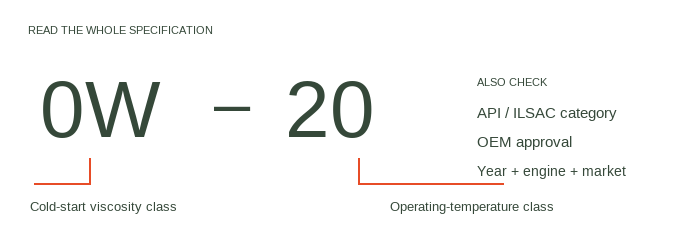
Keep oil problems out of the shopping guess
An engine using oil or making noise should be assessed rather than given a thicker grade by default. Record the current oil, level checks and symptoms. A change that falls outside the requirement may complicate later diagnosis and does not establish that a mechanical problem has been repaired.
- Confirm grade and approval together.
- Do not choose by mileage alone.
- Keep service limits unchanged unless directed.
- Resolve conflicting lookup results before purchase.
If the wrong product was fitted
Read the invoice and exact oil data before assuming a problem. Some oils carry multiple approvals, but the viscosity requirement still matters. Ask the service provider to explain the match to the vehicle specification and correct a confirmed mismatch appropriately. Avoid running an experiment simply because the engine currently sounds normal.
Common questions
Can I switch to 5W-30 at high mileage?
Only when the manufacturer permits it or qualified vehicle-specific guidance supports the change.
Does the same 5W make them interchangeable in winter?
No. The high-temperature grade and performance requirements still differ.
Should I change the interval after changing grades?
A permitted grade change does not automatically create a new service interval. Keep the vehicle’s schedule, operating-condition rules and calendar limit unless the manufacturer gives a specific different instruction.