Mercedes-Benz lists MB 229.5 and MB 229.52 on separate approval sheets, with 229.52 described as Low SPAsh. Both direct vehicle and engine application questions to sheet 223.2. Use that application guidance before choosing a listed product.

Two different questions need two references
The Mercedes-Benz Operating Fluids site separates the engine-application overview from the lists of approved oils. Sheet 223.2 identifies specified service oils by application; sheets such as 229.5 and 229.52 identify products within a specification. Finding an oil on one list does not by itself establish that your engine uses that list.
The official site labels 229.52 as Low SPAsh multigrade service engine oil. Its separate 229.5 page is another multigrade service-oil list. These names support a distinction, but they do not establish a universal switch based solely on model age, diesel versus gasoline or a larger approval number.
Build the vehicle identity before browsing products
Record the model year, engine designation and market. Include any applicable emissions or production distinction that the factory documentation uses. A C-Class or E-Class badge can cover several unrelated oil applications, so a shopping filter based only on that badge is incomplete.
Start from the actual handbook or engine-specific service information, then consult the current application overview when it is relevant. Keep all footnotes attached to the matching row. Do not apply a global table entry while overlooking a market restriction or an exception for a particular engine variant.
Verify the exact oil rather than the product family
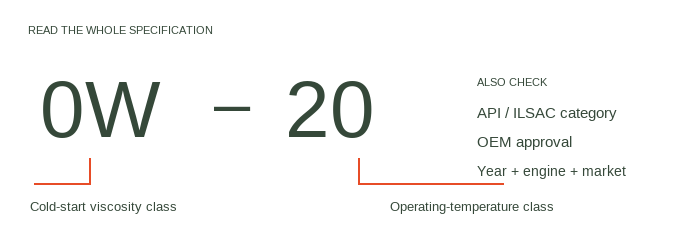
Once the required sheet and permitted viscosity are known, search the corresponding approved-product list. Match the full product name and grade. A brand can sell a conventional approval, a low-ash version and a different fuel-economy formulation under closely related names.
Read the container’s exact approval wording and compare it with the current list. A seller’s phrase “for Mercedes” does not identify a sheet. If the product cannot be matched, ask the supplier to clarify its approval status or choose a documented alternative in the required application.
Use the Mercedes references in order
| Reference | Purpose | Check before using it |
|---|---|---|
| Owner and engine documentation | Identify the vehicle’s required oil | Exact engine, year and market |
| Sheet 223.2 | Service-oil application overview | Matching row and footnotes |
| Sheet 229.5 or 229.52 | Approved products within the specification | Exact product and permitted viscosity |
Common questions
Is 229.52 automatically a better replacement for 229.5?
The approval number is not a universal upgrade ranking. Use the vehicle’s specified application and permitted viscosity.
Can I decide from the word diesel alone?
Engine and emissions-system differences matter. Follow the exact factory application and any relevant footnotes, then select a listed product.