A sudden increase in measured oil use deserves investigation even when the engine previously used some oil. Reconfirm the measurement, then compare recent service, leaks, driving conditions, and engine behavior. A sharp level drop, heavy smoke, or a pressure warning needs immediate assessment.

Check that the comparison is valid
Use the same level-check conditions and verify that the earlier and current readings were both reliable. Record distance and measured additions instead of comparing how often you happened to open the hood. Note a recent change in oil specification, filter, engine repair, or service quantity. A new route with towing or sustained load can provide useful context, but do not assume it fully explains a large change without checking for a leak.
Look for the new evidence
Inspect accessible cooled surfaces for fresh wetness and check whether an undertray is retaining oil. Record exhaust smoke timing, fault codes, rough running, unusual noises, and coolant changes. The ventilation system, turbocharger where fitted, and internal condition may be relevant. Avoid changing to a thicker product or adding a treatment before recording the baseline because that can confuse a manufacturer or warranty consumption assessment.
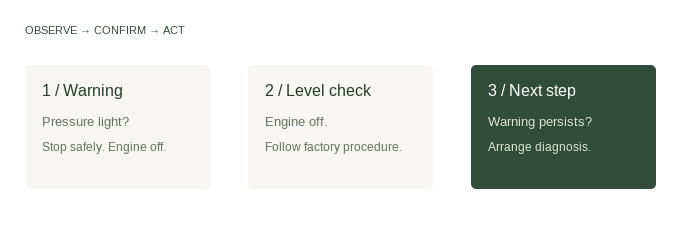
Arrange a targeted diagnosis
Bring the before-and-after log and exact service products to the workshop. Ask which tests are justified by the new symptom and whether any engine-specific service information applies. An investigation can begin with straightforward leak and ventilation checks before more invasive testing if appropriate. Keep checking the level often enough to remain in range, but do not treat frequent top-ups as a long-term repair plan for a newly changing fault.
- Compare measured quantity per known distance.
- Record all recent service changes.
- Photograph new leaks or smoke safely.
- Ask for an engine-specific diagnostic plan.
Common questions
Can a different oil brand explain everything?
Product history matters, but a sudden change should not be assigned to a brand without checking specification and mechanical evidence.
Should I wait until the next service?
A new substantial change warrants earlier assessment; warning signs or rapid loss need prompt action.