Choose the manufacturer’s permitted oil grade and approval for the expected conditions. The W classification concerns low-temperature performance, but a lower W number alone does not make an otherwise unsuitable oil correct for the engine.

Use the vehicle’s temperature guidance
Find any allowed grades or cold-condition instructions in the manual for the exact engine and market. If a temperature chart is provided, read its limits and notes. Avoid applying advice for another engine simply because both vehicles experience the same winter weather.
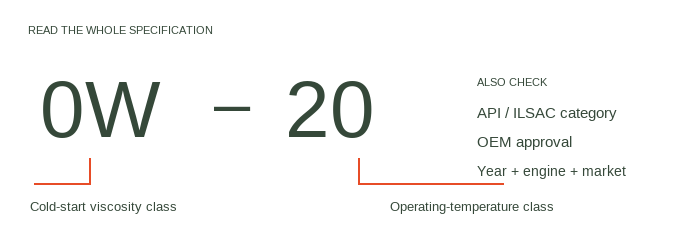
Keep the full grade in view
The W part and the second number describe different classifications. Moving from one bottle to another may change both, or it may change the approval despite similar viscosity numbers. A cold-start marketing claim cannot replace the required performance category or manufacturer approval. Check the exact product variant.
Review short-trip service conditions
Winter can bring repeated cold starts and journeys that do not fully warm the engine. Compare that pattern with the manufacturer’s severe-use definitions. Do not assume low mileage means easy service. Keep the calendar limit in view and check the oil level using the prescribed procedure rather than a convenient but inconsistent cold reading.
- Record the required grade and approval.
- Read any permitted cold-climate alternative.
- Keep routine checks consistent.
- Review the schedule when trips become shorter.
Avoid treating oil as the whole starting system
A cold-start problem can involve a battery, starter, fuel or other systems. Changing oil outside the requirement is not a complete diagnosis. Use the manufacturer’s cold-weather preparation guidance and approved starting practices. If the car needs assistance, describe the actual symptoms and conditions rather than assuming the oil must be too thick.
Common questions
Does 0W mean the oil is only for winter?
No. It is a low-temperature classification within a multigrade product.
Can I ignore approvals when buying a winter oil?
No. Grade and performance requirements both remain necessary.
Should I warm the engine differently after an oil change?
Follow the vehicle’s operating and service instructions rather than creating an oil-specific idle routine. Correct fill, pressure-warning behavior and the final level check remain the relevant service checks.
