First identify where the smoke comes from. Oil spilled onto hot exterior parts differs from smoke exiting the tailpipe, and an overfill or active leak needs correction. Stop safely for heavy smoke, a pressure warning, or a possible fire; do not run the engine merely to burn away an unknown spill.

Locate the source from a safe position
After switching off and allowing components to cool, inspect from above for oil around the filler opening, missing caps, or fresh leakage. Do not reach toward hot exhaust parts or rotating fans. Record whether smoke rose under the hood or left the exhaust outlet. If there are flames or immediate danger, move away and contact local emergency services. A burning smell alone does not show that the issue is only harmless leftover oil.
Check level and recent work
Follow the manual's procedure to verify the sump level. Review the oil quantity and specification on the invoice, and ask whether oil was spilled onto shielding during service. A level above maximum, rough running, or ongoing tailpipe smoke points to a different assessment from a small exterior spill. An undertray can hide an active leak. Avoid repeated starts as a way to see whether the smoke eventually clears.
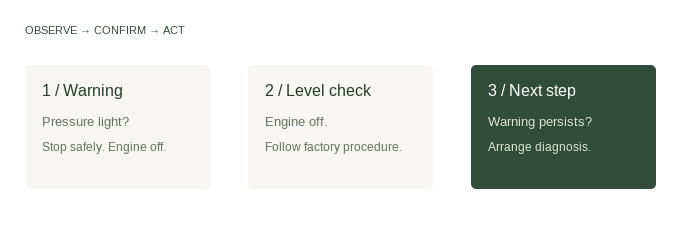
Ask for a complete correction
The service provider should identify an active leak or overfill, correct it, clean affected areas appropriately, and verify the result. If smoke is from the tailpipe, the technician may need to assess oil entering combustion rather than only wiping exterior parts. Keep the symptom timeline and photos. Do not accept an instruction to drive for a fixed distance without a clear explanation of the confirmed cause and safe operating conditions.
- Identify under-hood versus tailpipe smoke.
- Record oil level and warning messages.
- Keep people away from hot or burning components.
- Have the source confirmed before normal use.
Common questions
Will spilled oil always burn off safely?
Do not assume that. The spill location, amount, and presence of an active leak must be assessed.
Could too much oil cause smoke?
A confirmed overfill is relevant and needs correction, but smoke alone does not establish the cause.